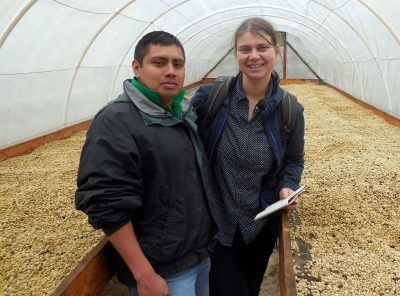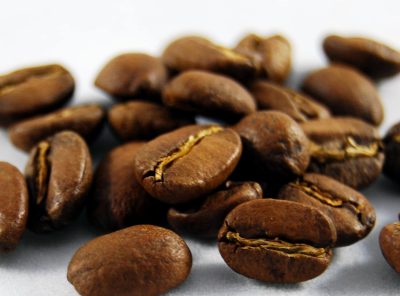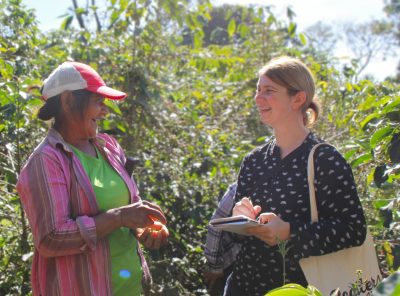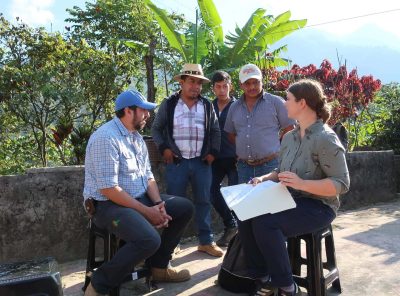

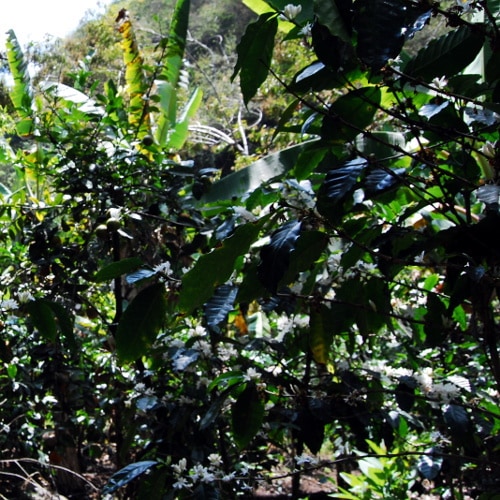
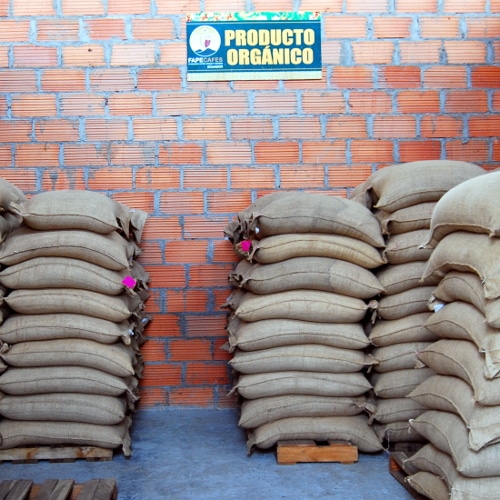
We make sure that the coffee is cultivated in an ecological way. This is the case if chemical–synthetic aids and genetic engineering are avoided, but also if the cultivation focuses on intercropping. This is good for the soil because it isn’t strained and there is less erosion. The plants can also flourish in each other’s shadows. More habitats are preserved than in a plantation, which is good for biodiversity. In this way, farmers can also cultivate produce for their own consumption and expand their offering. All of our coffee beans are harvested by hand.
All our coffees are organically grown and certified. Since 2016, our coffee roastery has also been certified as organic and all our coffees come with the official German “BIO” and EU “organic” labels. Moreover, the conditions in the countries where the coffee is grown are very important to us, and thus, we only work with cooperatives that take ecological measures very seriously.
Climate change has a major impact on coffee cultivation: it makes growing conditions more difficult in the countries of origin, can threaten the livelihoods of individual coffee producers, and affects biodiversity. The emissions that contribute to climate change are largely emitted at our end of the supply chain, particularly in air travel and distribution. We therefore pay particular attention to our own environmental sustainability and strive to continuously reduce our energy consumption.
Of course, we use green power, recycle and our printed material is climate neutral via carbon offsetting. Over the next years, we want to produce as little garbage and CO2 as possible. We also offer our coffee in bins with deposit. You can bring your used coffee bags and we will collect them in our Zero Waste Box.